I am an American who has lived in Leeuwarden since 1992. I am a second-year student at NHLStenden and am following the Flex Opleiding to become an English teacher.
View all posts by anjadebertstudentnhlstendencom
20 thoughts on “DWP #4: The Final Frontier?”
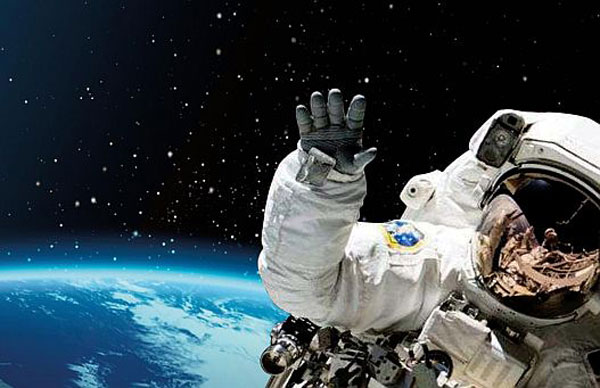
While I am not very involved in space exploration news and launchings the topic has always interested me. It is an amazing innovation of humanity to exit our orbit and enter the universe. But are we spending too much money on the unknown?
I read some debates and some articles about what people think about this topic as it is quite relevant. (Hanbury-Tenison, 2017) gives a really good argument against the investment in space. He claims that scientists are focusing way too much on new innovations and ideas whilst instead we could be focusing on Earth and its problems here. For example, if we would be spending the money invested in space on our environmental problems, then maybe we would be better off here. Also, my personal opinion is that as humans we are very curious human beings but just because there is a lot to discover doesn’t mean that we need to. Sometimes it is best to leave the universe alone and focus on what we need to change about our way of living.
On the other hand, (Science and Astronomy, 2015) explains where the money goes that is being used for further exploration into space. It is used for salaries for the hard working people. Another counter argument is that we should look at the satellites. Look what they have brought us already, internet. The article poses an extremely intriguing opinion. Space exploration has brought us so much already, imagine all the things else we could find.
All in all, I am not specifically leaning to one side more. I believe it is important to develop our technology and that people doing so are paid well but I think we should also look at ourselves to fix what we have destroyed instead of always looking for another more intricate solution.
Dear Femke, I couldn’t agree with you more on the fact that space exploration, however intriguing and ingenuous, should perhaps be temporarily put in the fridge so as to focus on more urgent global problems. Well-put!
Space is something, some people are really passionate about it. I can find myself In the middle of people who are passionate about it and people who do not give a damn about what is happening out there.
In my opinion, space should be space. How magnificent is it, to not know what is happening out there? The complete mystery, is what keeps the space interesting. What if we found out after years of research, that there is another planet with life on it and we are never ever ever going to reach it as there is no oxygen or edible food for our human kind? What a bummer would that be.
As a kid I loved the stories my father would made up about space and ‘marsmannetjes’. If I ever get the privilege to have kids myself, I would tell those stories again. Again, what a pity if your four years old daughter corrects you and says ‘No mom, space man aren’t red research has shown they are blue’.
On the other hand, I would sign up for a private flight around the globe if that idea every really comes off the ground, but I am afraid due to environmental problems, this is not a realistic idea anymore. This would be a bucket list experience, not only for me, but I think for a lot of people.
So conclude this prompt; I would not invest more money, effort or time in space exploration.
I love that your dad told you stories he would make up. I would love to hear one of them! Your idea of knowing there’s life out there we can’t contact is pleasantly original.
On a grammatical note, your punctuation makes it a little difficult to read:
There is no need for a comma in the first sentence, nor after ‘mystery’ in the second paragraph.
Either ‘What if we found out, after years of research,… ‘ or no comma at all (defining relative clause). This sentence does need a comma, however, before ‘and’ (coordinating conjunction).
Some punctuation necessary in the dialogue, between ‘red’ and ‘research’.
In the last sentence, a colon is called for, not a semi-colon.
You could take a scroll through https://dictionary.cambridge.org/grammar/british-grammar/punctuation
I bring this up because it’s a shame for the reader to get caught up in trying to figure things out instead of in enjoying your fine writing.
I am not actually involved in news of space exploration, but it still was very interesting to me from a very young age! When I was in primary school, children would always do their ‘lecture’ (spreekbeurt) about cats and dogs and stuff, and here I was, speaking about the big bang theory and planets. I think the space is so beautiful and I still believe a little bit in aliens. If we are living on this planet, then there sure can be another planet in another solar system with life on there too!
I think that effort isn’t a huge problem, cause there are people who put all their time in investigating the space, and I respect them a lot. I could never understand any one of those space terms they speak about! It would be very nice if there was more money to explore the whole universe, maybe we would find out if there is another ‘planet earth’ somewhere. That would be so awesome! And another reason for me is, they can do more research about asteroids. I heard in the news that there is a big asteroid coming towards planet earth and to be honest, it makes me a little bit scared. I hope they will find out that it is not possible at all to hit our planet, cause I really don’t want to end my life like the dinosaurs did!
So, in conclusion: I would spend more money on space investigation.
How fabulous that you had such an interest as a child! Sharing this in your introduction really draws me in to your piece. I think you’ve come up with another prompt: if the path of an oncoming asteroid was discovered, would you want to know whether or not it will hit the earth? Thanks for that new angle.
P.S. The term ’cause’ is for spoken language. In writing it needs to be ‘because’, unless it’s in dialogue, in which case it needs an apostrophe (’cause), as you’re leaving out the ‘be’.
Last year I attended my first Forum voor Democratie congress. The leader of the youth wing stepped forward and began his speech with the topic of space exploration. He explained that this era of excitement and discovery is being treated as ‘over’, which is a shame. Decades ago, the idea of space travel felt exhilarating. Nowadays, people who suggest the idea of going to Mars, for example, are treated as if they’re out of their mind.
I agree with the sentiment that space exploration and finding intelligent life should receive a big budget. I also do not think that the current neglect of our own environment (Earth) has anything to do with the budget given to space travel, but it does send a signal. Why try so hard to populate Mars or look for habitable planets when our own planet can be saved?
In the end, I believe space exploration should be well-funded. Along with useful scientific analysis it also provides people with a sense of unity and optimism, something I sorely miss amidst all this divided talk about climate change, extinction threats and oceans turning into plastic soup. Nevertheless, let’s not forget we only have one planet to live on and we better make an effort to fix it.
Whilst I was reading today’s prompt, the first thing that popped in my head was the series “The 100”. This series is about people living in space due to shortage of oxygen on the earth. Whilst being in space, the citizens of the ship find out that there are many more planets where humans can live and survive.
What I am trying to say with this introduction is, what if humans went up in space to investigate and really do find other planets where humans could possibly survive. I think there would be a huge amount of people who would sign themselves up to investigate on that planet and try to make it survivable for humans, because I think that our own planet is starting to fail regarding global warming, etc.
However, I think space is a magnificent and mysterious thing and for no reason at all, I would love to stay it that way. It is not that I am particularly fond of the space, but somehow, I do think that humans will do exactly the same thing to the universe as to many other things, which is that they will find a way to screw the universe up, just like they did to the world.
In conclusion: in my opinion there shouldn’t me more time, money, and effort invested in space exploration, except for when there is a huge change that the world might actually end.
Your adjectives ‘magnificent and mysterious’ describe space not only well but concisely, too. The inevitablity of humans doing to space what they’ve done to the earth is a sad but apt argument. Then again, waiting until we know for sure the world is going to end might be too late!
While in reality we still have our whole world to explore, the humans have found that earth has become to cramped. We are bored of being stuck on are little rock floating through space, we seek to go beyond the cradle and into the distant stars, the unknown.
With NASA’s plans for 2024 and Elon Musk’s companies Reusable rockets, I believe that its safe to assume that more and more time and money is being invested in space exploration. This is not a matter of should it or should it not be happening, but rather the reality of how things are progressing upon this little planet. Its funny in away, man takes everything the planet he was born on provides only so that he can leave it behind… I believe that this is a necessary step for the development of humanity as a whole. Neil Armstrong took the first both physically and metaphorically, he was a baby that stood up on its feet for the first time, since then we began learning how to walk and now I believe its time for to learn how run. By investing money in space exploration I believe that humans will be able to run, maybe even sprint and take the leap into to the dark unknown only to find the potential to go on and further improve ourselves. It does not matter what it is that we find, progress comes in many forms, both through fortune and the tragedy. We will learn and develop and through this achieve greatness beyond our current imagination, yet all that is but a dream for now and it will stay a dream until we truly invest ourselves with the concept that is space.
Your clever use of the ‘growing up’ motief throughout the piece creates a wonderful visual aid to follow your reasoning. I also enjoy how you combine being realistic with being optimistic; the former can often lead to cynicism. I find it mature writing to state the sources of information to support your argument (NASA; reusable rockets; Neil Armstrong) without bogging down the piece by explaining them. Assuming the reader may already know about them and that, if they don’t, they can pursue it on their own, is, or at least implies, a show of respect (which, naturally, is pleasing to the reader!).
With a little attention to editing, you could eliminate some of the small grammatical distractions.
Space exploration is an interesting subject as it has brought us many new technologies and answers about the origins of life. That being said, I do think that right now we’re spending just about enough on space exploration. I find the ventures of billionaires like Jeff Bezos and Elon Musk rather interesting. I mean who would have thought 20 years ago that one day it would be possible to live on Mars? Or that one day we’ll be able to reach any place on earth in less than 30 minutes by using a space shuttle? – For reference, this project by Musk is called Big Fucking Rocket. It’s interesting as hell and I definitely see mankind become an interplanetary species in the upcoming centuries because that’s what mankind does best. We think of something that seems impossible, we give it about 20 years and suddenly it can be done with a finger tap. However, apart from being enthusiastic about space, I also believe this has a downside, all these projects cost money and while it sounds awesome to live on Mars one day, we shouldn’t be spending billions on it while we could use that money to save planet earth. Climate change is a real threat and planet earth is perfectly suited for humans so maybe we should try to fix earth first and then we can look at growing Matt Damon’s shit potatoes on Mars.
You argue the conundrum well! Should we be sensible or (recklessly) adventurous? Your final statement sounds like a solid plan.
On a cultural note, Dutch communication is rather more relaxed in its use of curse words. In English these are largely considered inappropriate in writing meant to be read by anyone outside your personal circle (or in a medium in which it is clear your readers can expect it). Elon Musk’s project was formally called Big Falcon Rocket and has since been changed to Starship, presumably because the informal name was considered beyond acceptable. I see it is in quotation marks in Wikipedia, indicating it is a quote, but generally in the media the term is avoided. At least one * could be used as a substitute. The word “shit” is also too strong for written English in this type of setting, and even “as hell” is more of an expression you would use with people you know, and whom you know won’t be offended.
In primary school we had a teacher who was completely obsessed with space, she loved to tell us all the progress this subject has been making, and she hoped this process would continue to grow. I loved to listen to her talk about this subject, because she was so passionate about it. What intrigued me the most was the unknown, the guessing and the hoping.
I love to think about what else could possibly be out there. That is why I think that we should leave it, the way it is at the moment. We can fantasize and make up our own version, that is what makes it so much more interesting. We can let our imagination run free, I loved to do this, and I hope future generations are also able to experience this feeling of wonder.
Another reason why I think we should leave the space exploration the way it is, is because it will cost us a lot of money. Seeing that there are more pressing matters that need our attention as well as the funds. I think it would be wise to spend the money on matters that are important now. So, we can preserve the planet as we know it.
I’ve just read some pieces that got me excited about space exploration, but after reading yours I am charmed and seduced by your description of the beauty and romance of the unknown and the enormous freedom it offers to imagine without limits. Sharing your childhood exprerience enhances my feeling of wonder. Thanks!
It all started when the Soviet Union launched the world first satellite into space. This event sparked the ‘moon race’, also referred to as ‘space race’. Ever since, mankind has invested millions upon millions of dollars into space exploration.
Just six months ago NASA released a video on YouTube stating that they are determined to go back to the moon and further, to stay. They strive to do so by 2024.
After reading this, you would think NASA has more than enough money to execute their plans. However, that is incorrect, as NASA only receives 0,5% of the annual budget of the United States. The US military, however, receives 54% of that budget. If you take these numbers into consideration, you start to think about how much NASA has already achieved with only that small percentage. Now let your mind wonder about how much more they could do with 2% of that budget.
Furthermore, funding space exploration also means funding the development of new technology and research into climate change as well. People often argue that space explorations should receive less funding as the money should go towards the environment, and with that, stopping global warming. This argument is invalid, as the research and exploration of other, younger, solar systems helps us learn about how earth formed, and how our climate has formed. This information is of paramount importance to better understand the impact and problems of global warming.
For this reason, I say that space exploration is worth every single penny, minute and ounce of effort. We have seen earth, travelled it, explored it until barely anything was left to discover. Now we have the possibility to wander new worlds, to develop and progress. The earth is small, the galaxy colossal. We are going.
You write exceptionally well, Juliet. Your ability to make (scientific!) facts not only palatable but engaging is admirable. You deftly guide me along the outline of your argument without at any time speaking to me in a condescending manner. This was a pleasure to read.
I think there should be absolutely no more recourses spend on space exploration. No money, no time, no effort at all. If humans were to find another planet they could survive on they would mess it up as much or even worse than what we did to the earth. The earth is dying and humans are absolutely the reason why. We filled the oceans with plastic, trash and oil. The land doesn’t look much better, filled with trash everywhere you look. Entire forests have been cut down, multiple species have gone extinct, so many more are endangered. People eat meat 4 times a week which not only takes the animals but also the water it takes to feed the animal. The world is heating up and the icecaps are melting, on top of that emissions are higher than ever. And there isn’t enough being done about it.
I think if humans were to find a planet big enough for us, where we could breathe and there is water and whatever else we need to survive we should back off and let it be. Don’t screw up another planet like we did to the earth because humans will continue to do that to each planet found.
Nice structure in the presentation of your argument. You make your stance clear from the beginning and then support it with a good number of well-worded reasons. Everything is then summed up and a new idea is introduced in the conclusion. I like how you let the strength of your feelings come through without becoming preachy. Sadly, sometimes human nature is indeed not very pretty.

 Daily Writing Prompts
While I am not very involved in space exploration news and launchings the topic has always interested me. It is an amazing innovation of humanity to exit our orbit and enter the universe. But are we spending too much money on the unknown?
I read some debates and some articles about what people think about this topic as it is quite relevant. (Hanbury-Tenison, 2017) gives a really good argument against the investment in space. He claims that scientists are focusing way too much on new innovations and ideas whilst instead we could be focusing on Earth and its problems here. For example, if we would be spending the money invested in space on our environmental problems, then maybe we would be better off here. Also, my personal opinion is that as humans we are very curious human beings but just because there is a lot to discover doesn’t mean that we need to. Sometimes it is best to leave the universe alone and focus on what we need to change about our way of living.
On the other hand, (Science and Astronomy, 2015) explains where the money goes that is being used for further exploration into space. It is used for salaries for the hard working people. Another counter argument is that we should look at the satellites. Look what they have brought us already, internet. The article poses an extremely intriguing opinion. Space exploration has brought us so much already, imagine all the things else we could find.
All in all, I am not specifically leaning to one side more. I believe it is important to develop our technology and that people doing so are paid well but I think we should also look at ourselves to fix what we have destroyed instead of always looking for another more intricate solution.
Femke Calame Fonville. 2A.
LikeLiked by 1 person
Dear Femke, I couldn’t agree with you more on the fact that space exploration, however intriguing and ingenuous, should perhaps be temporarily put in the fridge so as to focus on more urgent global problems. Well-put!
LikeLike
Bibliography
Hanbury-Tenison, R., & Bizony, P. (2017, January 1). Debate: For and against space exploration – is space research a waste of time? Retrieved from https://eandt.theiet.org/content/articles/2011/10/debate-for-and-against-space-exploration-is-space-research-a-waste-of-time/.
Person. (2015, June 10). Of Course Space Exploration is Worth the Money. Retrieved from https://www.space.com/29621-of-course-space-exploration-is-worth-the-money.html.
LikeLike
Space is something, some people are really passionate about it. I can find myself In the middle of people who are passionate about it and people who do not give a damn about what is happening out there.
In my opinion, space should be space. How magnificent is it, to not know what is happening out there? The complete mystery, is what keeps the space interesting. What if we found out after years of research, that there is another planet with life on it and we are never ever ever going to reach it as there is no oxygen or edible food for our human kind? What a bummer would that be.
As a kid I loved the stories my father would made up about space and ‘marsmannetjes’. If I ever get the privilege to have kids myself, I would tell those stories again. Again, what a pity if your four years old daughter corrects you and says ‘No mom, space man aren’t red research has shown they are blue’.
On the other hand, I would sign up for a private flight around the globe if that idea every really comes off the ground, but I am afraid due to environmental problems, this is not a realistic idea anymore. This would be a bucket list experience, not only for me, but I think for a lot of people.
So conclude this prompt; I would not invest more money, effort or time in space exploration.
Martine Schrik – VO Docent Engels 2C
LikeLiked by 1 person
I love that your dad told you stories he would make up. I would love to hear one of them! Your idea of knowing there’s life out there we can’t contact is pleasantly original.
On a grammatical note, your punctuation makes it a little difficult to read:
There is no need for a comma in the first sentence, nor after ‘mystery’ in the second paragraph.
Either ‘What if we found out, after years of research,… ‘ or no comma at all (defining relative clause). This sentence does need a comma, however, before ‘and’ (coordinating conjunction).
Some punctuation necessary in the dialogue, between ‘red’ and ‘research’.
In the last sentence, a colon is called for, not a semi-colon.
You could take a scroll through https://dictionary.cambridge.org/grammar/british-grammar/punctuation
I bring this up because it’s a shame for the reader to get caught up in trying to figure things out instead of in enjoying your fine writing.
LikeLike
I am not actually involved in news of space exploration, but it still was very interesting to me from a very young age! When I was in primary school, children would always do their ‘lecture’ (spreekbeurt) about cats and dogs and stuff, and here I was, speaking about the big bang theory and planets. I think the space is so beautiful and I still believe a little bit in aliens. If we are living on this planet, then there sure can be another planet in another solar system with life on there too!
I think that effort isn’t a huge problem, cause there are people who put all their time in investigating the space, and I respect them a lot. I could never understand any one of those space terms they speak about! It would be very nice if there was more money to explore the whole universe, maybe we would find out if there is another ‘planet earth’ somewhere. That would be so awesome! And another reason for me is, they can do more research about asteroids. I heard in the news that there is a big asteroid coming towards planet earth and to be honest, it makes me a little bit scared. I hope they will find out that it is not possible at all to hit our planet, cause I really don’t want to end my life like the dinosaurs did!
So, in conclusion: I would spend more money on space investigation.
Hanneke Hiemstra, 1B
LikeLiked by 1 person
How fabulous that you had such an interest as a child! Sharing this in your introduction really draws me in to your piece. I think you’ve come up with another prompt: if the path of an oncoming asteroid was discovered, would you want to know whether or not it will hit the earth? Thanks for that new angle.
P.S. The term ’cause’ is for spoken language. In writing it needs to be ‘because’, unless it’s in dialogue, in which case it needs an apostrophe (’cause), as you’re leaving out the ‘be’.
LikeLike
Last year I attended my first Forum voor Democratie congress. The leader of the youth wing stepped forward and began his speech with the topic of space exploration. He explained that this era of excitement and discovery is being treated as ‘over’, which is a shame. Decades ago, the idea of space travel felt exhilarating. Nowadays, people who suggest the idea of going to Mars, for example, are treated as if they’re out of their mind.
I agree with the sentiment that space exploration and finding intelligent life should receive a big budget. I also do not think that the current neglect of our own environment (Earth) has anything to do with the budget given to space travel, but it does send a signal. Why try so hard to populate Mars or look for habitable planets when our own planet can be saved?
In the end, I believe space exploration should be well-funded. Along with useful scientific analysis it also provides people with a sense of unity and optimism, something I sorely miss amidst all this divided talk about climate change, extinction threats and oceans turning into plastic soup. Nevertheless, let’s not forget we only have one planet to live on and we better make an effort to fix it.
LikeLiked by 1 person
Whilst I was reading today’s prompt, the first thing that popped in my head was the series “The 100”. This series is about people living in space due to shortage of oxygen on the earth. Whilst being in space, the citizens of the ship find out that there are many more planets where humans can live and survive.
What I am trying to say with this introduction is, what if humans went up in space to investigate and really do find other planets where humans could possibly survive. I think there would be a huge amount of people who would sign themselves up to investigate on that planet and try to make it survivable for humans, because I think that our own planet is starting to fail regarding global warming, etc.
However, I think space is a magnificent and mysterious thing and for no reason at all, I would love to stay it that way. It is not that I am particularly fond of the space, but somehow, I do think that humans will do exactly the same thing to the universe as to many other things, which is that they will find a way to screw the universe up, just like they did to the world.
In conclusion: in my opinion there shouldn’t me more time, money, and effort invested in space exploration, except for when there is a huge change that the world might actually end.
Quinty Wiebrands, VO Engels 2C
LikeLiked by 1 person
Your adjectives ‘magnificent and mysterious’ describe space not only well but concisely, too. The inevitablity of humans doing to space what they’ve done to the earth is a sad but apt argument. Then again, waiting until we know for sure the world is going to end might be too late!
LikeLike
While in reality we still have our whole world to explore, the humans have found that earth has become to cramped. We are bored of being stuck on are little rock floating through space, we seek to go beyond the cradle and into the distant stars, the unknown.
With NASA’s plans for 2024 and Elon Musk’s companies Reusable rockets, I believe that its safe to assume that more and more time and money is being invested in space exploration. This is not a matter of should it or should it not be happening, but rather the reality of how things are progressing upon this little planet. Its funny in away, man takes everything the planet he was born on provides only so that he can leave it behind… I believe that this is a necessary step for the development of humanity as a whole. Neil Armstrong took the first both physically and metaphorically, he was a baby that stood up on its feet for the first time, since then we began learning how to walk and now I believe its time for to learn how run. By investing money in space exploration I believe that humans will be able to run, maybe even sprint and take the leap into to the dark unknown only to find the potential to go on and further improve ourselves. It does not matter what it is that we find, progress comes in many forms, both through fortune and the tragedy. We will learn and develop and through this achieve greatness beyond our current imagination, yet all that is but a dream for now and it will stay a dream until we truly invest ourselves with the concept that is space.
LikeLiked by 1 person
Your clever use of the ‘growing up’ motief throughout the piece creates a wonderful visual aid to follow your reasoning. I also enjoy how you combine being realistic with being optimistic; the former can often lead to cynicism. I find it mature writing to state the sources of information to support your argument (NASA; reusable rockets; Neil Armstrong) without bogging down the piece by explaining them. Assuming the reader may already know about them and that, if they don’t, they can pursue it on their own, is, or at least implies, a show of respect (which, naturally, is pleasing to the reader!).
With a little attention to editing, you could eliminate some of the small grammatical distractions.
LikeLike
Space exploration is an interesting subject as it has brought us many new technologies and answers about the origins of life. That being said, I do think that right now we’re spending just about enough on space exploration. I find the ventures of billionaires like Jeff Bezos and Elon Musk rather interesting. I mean who would have thought 20 years ago that one day it would be possible to live on Mars? Or that one day we’ll be able to reach any place on earth in less than 30 minutes by using a space shuttle? – For reference, this project by Musk is called Big Fucking Rocket. It’s interesting as hell and I definitely see mankind become an interplanetary species in the upcoming centuries because that’s what mankind does best. We think of something that seems impossible, we give it about 20 years and suddenly it can be done with a finger tap. However, apart from being enthusiastic about space, I also believe this has a downside, all these projects cost money and while it sounds awesome to live on Mars one day, we shouldn’t be spending billions on it while we could use that money to save planet earth. Climate change is a real threat and planet earth is perfectly suited for humans so maybe we should try to fix earth first and then we can look at growing Matt Damon’s shit potatoes on Mars.
LikeLiked by 1 person
You argue the conundrum well! Should we be sensible or (recklessly) adventurous? Your final statement sounds like a solid plan.
On a cultural note, Dutch communication is rather more relaxed in its use of curse words. In English these are largely considered inappropriate in writing meant to be read by anyone outside your personal circle (or in a medium in which it is clear your readers can expect it). Elon Musk’s project was formally called Big Falcon Rocket and has since been changed to Starship, presumably because the informal name was considered beyond acceptable. I see it is in quotation marks in Wikipedia, indicating it is a quote, but generally in the media the term is avoided. At least one * could be used as a substitute. The word “shit” is also too strong for written English in this type of setting, and even “as hell” is more of an expression you would use with people you know, and whom you know won’t be offended.
LikeLike
In primary school we had a teacher who was completely obsessed with space, she loved to tell us all the progress this subject has been making, and she hoped this process would continue to grow. I loved to listen to her talk about this subject, because she was so passionate about it. What intrigued me the most was the unknown, the guessing and the hoping.
I love to think about what else could possibly be out there. That is why I think that we should leave it, the way it is at the moment. We can fantasize and make up our own version, that is what makes it so much more interesting. We can let our imagination run free, I loved to do this, and I hope future generations are also able to experience this feeling of wonder.
Another reason why I think we should leave the space exploration the way it is, is because it will cost us a lot of money. Seeing that there are more pressing matters that need our attention as well as the funds. I think it would be wise to spend the money on matters that are important now. So, we can preserve the planet as we know it.
Sabrina Spaan VO Engels 2C
LikeLiked by 1 person
I’ve just read some pieces that got me excited about space exploration, but after reading yours I am charmed and seduced by your description of the beauty and romance of the unknown and the enormous freedom it offers to imagine without limits. Sharing your childhood exprerience enhances my feeling of wonder. Thanks!
LikeLike
It all started when the Soviet Union launched the world first satellite into space. This event sparked the ‘moon race’, also referred to as ‘space race’. Ever since, mankind has invested millions upon millions of dollars into space exploration.
Just six months ago NASA released a video on YouTube stating that they are determined to go back to the moon and further, to stay. They strive to do so by 2024.
After reading this, you would think NASA has more than enough money to execute their plans. However, that is incorrect, as NASA only receives 0,5% of the annual budget of the United States. The US military, however, receives 54% of that budget. If you take these numbers into consideration, you start to think about how much NASA has already achieved with only that small percentage. Now let your mind wonder about how much more they could do with 2% of that budget.
Furthermore, funding space exploration also means funding the development of new technology and research into climate change as well. People often argue that space explorations should receive less funding as the money should go towards the environment, and with that, stopping global warming. This argument is invalid, as the research and exploration of other, younger, solar systems helps us learn about how earth formed, and how our climate has formed. This information is of paramount importance to better understand the impact and problems of global warming.
For this reason, I say that space exploration is worth every single penny, minute and ounce of effort. We have seen earth, travelled it, explored it until barely anything was left to discover. Now we have the possibility to wander new worlds, to develop and progress. The earth is small, the galaxy colossal. We are going.
Juliet Wind, 1D
LikeLiked by 1 person
You write exceptionally well, Juliet. Your ability to make (scientific!) facts not only palatable but engaging is admirable. You deftly guide me along the outline of your argument without at any time speaking to me in a condescending manner. This was a pleasure to read.
LikeLike
I think there should be absolutely no more recourses spend on space exploration. No money, no time, no effort at all. If humans were to find another planet they could survive on they would mess it up as much or even worse than what we did to the earth. The earth is dying and humans are absolutely the reason why. We filled the oceans with plastic, trash and oil. The land doesn’t look much better, filled with trash everywhere you look. Entire forests have been cut down, multiple species have gone extinct, so many more are endangered. People eat meat 4 times a week which not only takes the animals but also the water it takes to feed the animal. The world is heating up and the icecaps are melting, on top of that emissions are higher than ever. And there isn’t enough being done about it.
I think if humans were to find a planet big enough for us, where we could breathe and there is water and whatever else we need to survive we should back off and let it be. Don’t screw up another planet like we did to the earth because humans will continue to do that to each planet found.
Samara Sahar 1b
LikeLiked by 1 person
Nice structure in the presentation of your argument. You make your stance clear from the beginning and then support it with a good number of well-worded reasons. Everything is then summed up and a new idea is introduced in the conclusion. I like how you let the strength of your feelings come through without becoming preachy. Sadly, sometimes human nature is indeed not very pretty.
LikeLike